

Should You Island Hop in Hawaii?
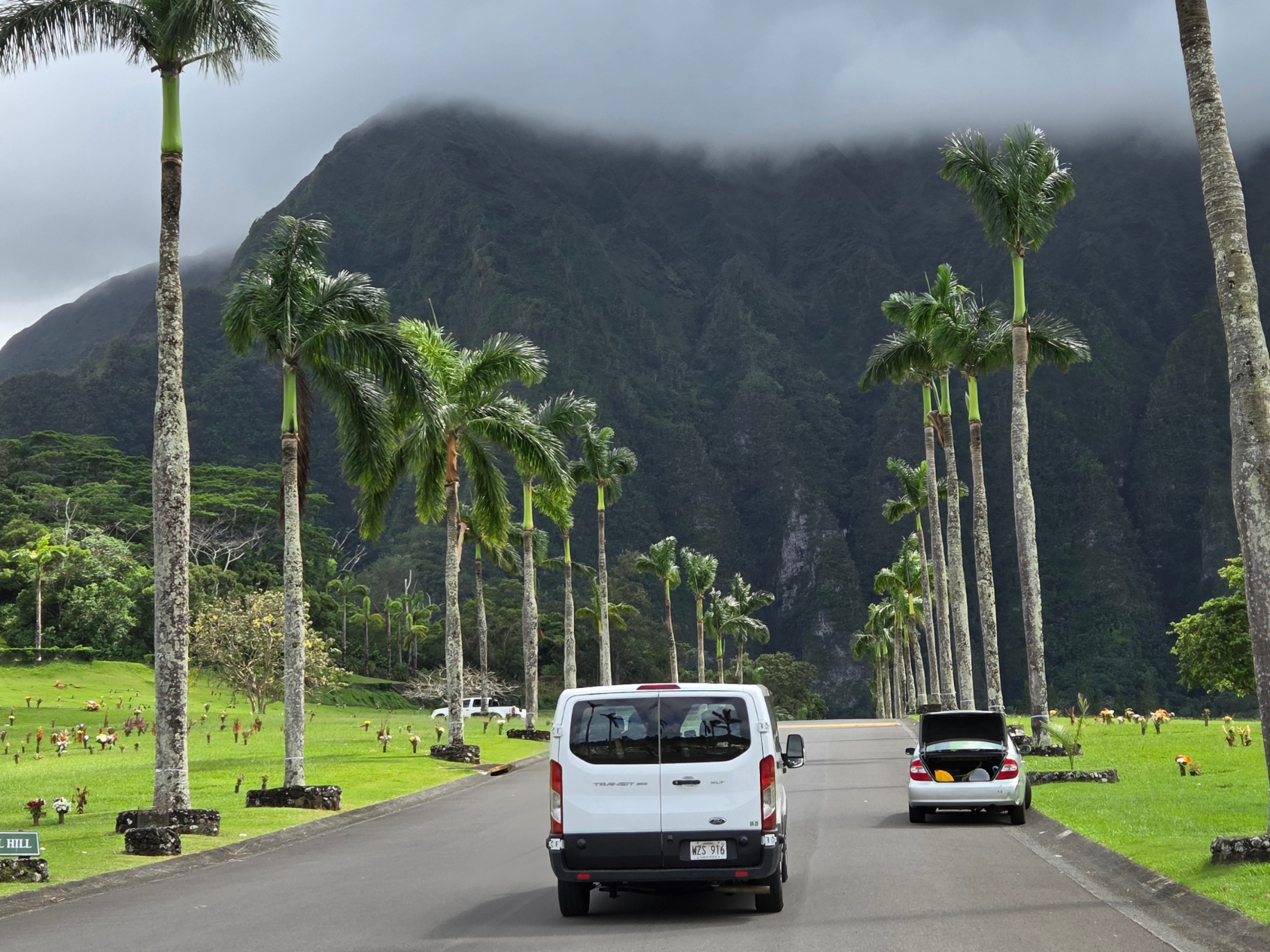
Oahu - Valley of the Temples Memorial Park
First-time travelers to Hawaii often feel that they need to visit more than one island. I get that. It takes a long time to get there and the flights aren’t cheap!
However, I don’t recommend island hopping unless you have at least 10 days to spend in the islands (and that doesn’t include your two travel days). Why? There are many reasons.
The Brutal Math of the "40-Minute Flight"
The biggest trap travelers fall into is looking at an inter-island flight schedule and thinking, "Oh, it's only a 40-minute hop, we won't lose any time!"
In reality, switching islands eats up an entire day of your vacation. Let’s look at the real-world math of how those hours actually disappear:
Packing & Check-Out (45–60 mins): Gathering all your gear, making sure nothing is left under the bed, checking out at the front desk, and loading the luggage.
Returning Rental Car #1 (30–45 mins): Driving to the airport, finding the rental return lot, waiting for the attendant to scan the car, and taking the shuttle tram to the terminal.
Airport Buffer (60–90 mins): Navigating agriculture inspection (mandatory for leaving any Hawaiian island), checking bags, and going through TSA lines.
The Flight (40–60 mins): Actual gate-to-gate travel time.
Baggage Claim & Rental Car #2 (45–60 mins): Waiting for your bags to hit the carousel, taking another shuttle to the new rental car facility, and waiting in line at the counter.
Driving & Check-In #2 (45–60 mins): Navigating an unfamiliar island's roads to your new resort, parking, and checking in.
The Grand Total: You are spending 5 to 6 hours in transit. By the time you unpack at your second hotel, half your day is completely gone, leaving you exhausted and missing prime beach hours.
4 More Reasons Island Hopping Hurts Your Vacation
Beyond the lost time, breaking up your trip introduces a handful of logistical headaches and hidden costs that most people don't anticipate.
The first major hurdle is the double rental financial hit. Renting a car in Hawaii is already one of the largest expenses of the trip. When you island-hop, you break up your rental into two shorter bookings. This completely destroys any chance of getting a cheaper weekly rate and exposes you to paying double the one-time local airport concession fees and taxes.
Second, you have to deal with severe packing restrictions and baggage fees. Inter-island carriers charge per checked bag on every single leg. If you are a family of four moving islands, that adds a significant extra cost roundtrip just in bag fees. Furthermore, smaller regional planes have strict weight limits, meaning you have to pack significantly lighter than you did for your mainland flight.
Third is the restless check-out to check-in limbo. Checkout is almost universally at 10:00 AM or 11:00 AM, and check-in at the next hotel isn't until 3:00 PM or 4:00 PM. This leaves you stranded with a car full of hot luggage. You can't comfortably go to the beach or go on a long hike because your electronics, passports, and gear are baking in the trunk of a rental car.
Fourth is psychological travel fatigue. Instead of waking up, grabbing a coffee, and melting into a beach chair, an island-hopping day forces you back into travel mode. You have to deal with traffic, schedules, lines, and TSA again. It completely disrupts the relaxed, slow-paced Aloha state of mind people go to Hawaii to find.
The Myth of Running Out of Things to Do
A lot of the pressure to island-hop comes from a fear that you'll get bored staying on just one island. But Hawaii’s islands aren't tiny Caribbean dots where you can see everything in two days. They are massive, ecologically diverse ecosystems.
Oahu is far more than just Waikiki Beach. On a single trip, you can experience the historic weight of Pearl Harbor, the world-class big-wave surf culture of the North Shore, hiking the ridge lines of the Koʻolau Range, and exploring the lush botanical gardens of Kaneohe.
Maui also offers endless exploration. You could easily spend a week just exploring the West and South resort coasts, but then you still have the Haleakalā volcano summit standing 10,000 feet up, the 600 plus hairpin turns of the Road to Hana, and the historic plantation towns like Makawao.
Kauai, known as the Garden Isle, offers incredibly dramatic terrain. It features the towering sea cliffs of the Nā Pali Coast, the massive Grand Canyon of the Pacific known as Waimea Canyon, and countless hidden waterfalls and rivers perfect for kayaking.
The Big Island of Hawaii alone is twice the size of all the other Hawaiian islands combined. It is so ecologically massive that it contains 8 of the world’s 13 distinct climate zones. In a single day, you can hike through a tropical rainforest in Hilo, walk across a stark volcanic desert in Kona, drive through the rolling green ranch pastures of Waimea, and look up at snow-capped polar tundra on the summit of Mauna Kea. Trying to tack this island on to a multi-island trip is a disservice to how much it has to offer.
The Smart Alternative: The One-Island Split-Stay
On Oahu, you can start your trip right in the middle of the action in Waikiki for the high-energy hustle and bustle, world-class dining, and shopping. Then, you can pack up and move over to the sunny, relaxed, and family-friendly lagoons of Ko Olina to stay at Disney's Aulani Resort for a completely slower, luxury pace.
On Maui, you can spend the first half of your week on the lively, historic west side in Kaanapali enjoying the beach boardwalks and boat tours. For the second half, you can head south to Wailea for a quieter, more upscale atmosphere with incredible snorkeling and relaxing resort lawns.
On Kauai, you can base yourself on the sunny south shore of Poipu for great swimming beaches and sunshine. Later in the week, you can move up to the lush, dramatic north shore of Princeville and Hanalei to be closer to hiking trails, waterfalls, and towering green mountains.
On the Big Island, you can split your time between the sunny, volcanic, resort-heavy Kona side to swim with manta rays and tour coffee farms, and then move over to the windward Hilo side to be surrounded by rainforests, waterfalls, and the active Volcanoes National Park.
By skipping the airport and choosing a single-island split-stay instead, you get the absolute best of both worlds. You get the thrill of discovering a brand-new landscape and vibe, without sacrificing a single precious day of your vacation to the travel gods.